Once during your turn (before your attack), you may flip a coin. If heads, look at your opponent's hand. If your opponent has any Baby Pokémon, Basic Pokémon, or Evolution cards there, choose 1 of them. Your opponent shuffles that card into his or her deck. This power can't be used if Crobat is affected by a Special Condition.
Attack
Double Cross
40×
Grass • 2 Colorless
Flip 2 coins. This attack does 40 damage times the number of heads. If both of them are tails, the Defending Pokémon is now Confused and Poisoned.
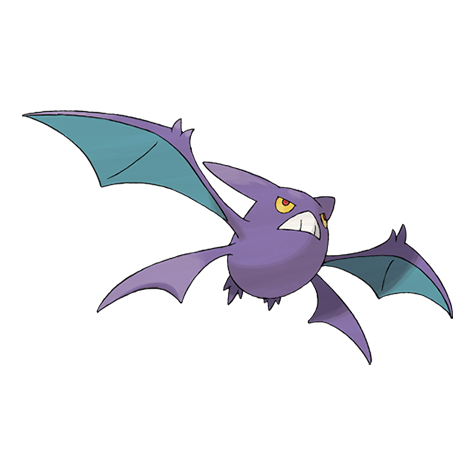
Artwork is identical across finishes; the holo or reverse shimmer is indicative.
Story & meaning
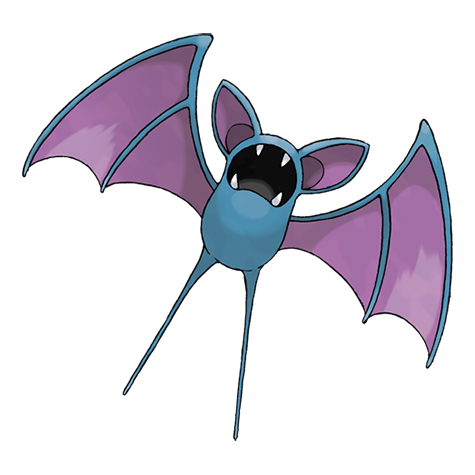
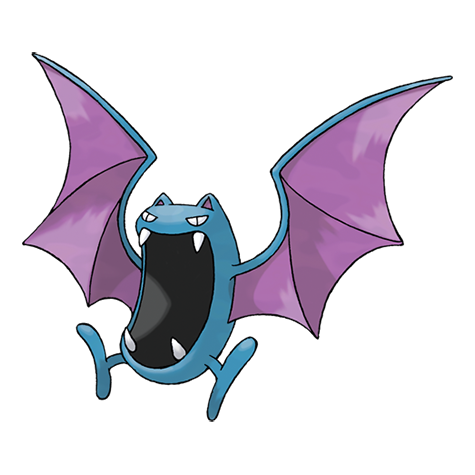
Crobat is the final evolution of Zubat, evolving from Golbat when it reaches a high level of friendship—making it notable as one of the early friendship-based evolutions introduced in the Generation II games. Its defining trait is that its…
“Its hind limbs have become another set of wings. Crobat expertly maneuvers its four wings to dart in exquisite fashion through even the most confined caves without losing any speed.”
Read full notes
History
Crobat is the final evolution of Zubat, evolving from Golbat when it reaches a high level of friendship—making it notable as one of the early friendship-based evolutions introduced in the Generation II games. Its defining trait is that its hind legs have developed into a second pair of wings, granting it four wings total and exceptional, silent flight that lets it dart through cramped caves without slowing down. A Poison/Flying-type known for its high speed, Crobat preys on the blood of other creatures while in flight and is associated with caves and nocturnal habitats throughout the Pokemon world.
Name & meaning
The Japanese name クロバット (Kurobatto) is a blend of クロ (kuro, meaning 'black') and the English word 'bat,' alluding to its dark coloration and bat-like form. The English name 'Crobat' is essentially a near-direct adaptation of the Japanese, combining a 'Cr-' element (often interpreted as evoking 'cross' for its crossed wing-limbs, or simply carrying over the 'kuro' sound) with 'bat.' Both names ultimately center on the bat motif that defines the species.